
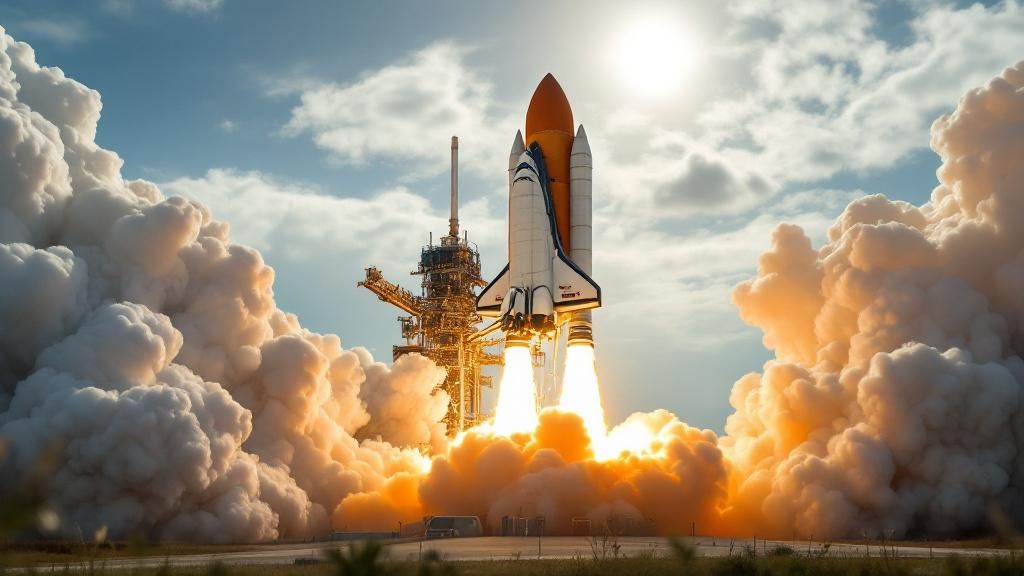
Nasa’s Artemis II crew has officially commenced a landmark ten-day mission around the Moon, launching into the cosmos in what represents a significant milestone for the agency’s far-reaching deep-space exploration programme. The crewed spacecraft, which lifted off from Florida, will avoid landing on the lunar surface but instead circle the Moon whilst venturing further from Earth than any human has ever ventured before. This mission follows the successful uncrewed Artemis I flight in 2022 and represents a crucial stepping stone towards Nasa’s ultimate goal of establishing sustained lunar exploration and ultimately arriving at Mars in the 2030s. The journey underscores humanity’s fresh dedication to pushing the boundaries of space exploration and readying for the challenges of space travel between planets.
A Modern Era of Deep-Space Exploration
The Artemis II mission constitutes a watershed moment in humanity’s return to lunar exploration after a gap of more than fifty years since the Apollo programme concluded. By travelling beyond Earth than any previous human spaceflight, the astronauts will collect invaluable data on radiation effects, life support systems, and human performance in deep space—critical information that will shape future missions. This ambitious undertaking demonstrates Nasa’s confidence in its redesigned spacecraft and launch systems, which have been substantially redesigned and improved since the Apollo programme era. The mission’s success will validate the agency’s technical expertise and bolster international faith in its strategy for ongoing space exploration.
Beyond the immediate scientific goals, Artemis II serves as a testament to international cooperation and technical progress. The mission expands on decades of experience gained from the ISS programme and incorporates insights gained from multiple automated lunar probes. Achievement will not only inspire a fresh wave of scientists and engineers but also create opportunities for establishing a permanent lunar base and eventual human missions to Mars. The crew’s journey around the Moon will seize the world’s imagination whilst advancing humanity’s understanding of our place in the cosmos and our ability to venture into distant worlds.
- Crew will journey further from Earth than any human before
- Mission obtains essential deep-space radiation and life support data
- Validates upgraded spacecraft systems in preparation for upcoming Moon missions
- Prepares foundation for Mars missions in the 2030s
The Mission Profile and Research Goals
Ten Days Lunar Orbit
The Artemis II mission will span a precisely orchestrated ten-day journey that carries the astronauts on a circumlunar trajectory avoiding descent to the lunar surface itself. During this timeframe, the astronauts will conduct extensive observations of the lunar landscape, validating messaging networks and guidance protocols that will become vital for upcoming lunar landings. The crew will undertake critical inspections on the spacecraft whilst circling the Moon, gathering data on how the vehicle performs in the demanding environment of deep space. This systematic strategy allows Nasa to confirm vital components before undertaking the greater difficulty of a crewed lunar landing in subsequent missions.
Throughout the ten-day voyage, the crew will document their observations through photography, video, and scientific data collection that will enhance our comprehension of the lunar environment. The extended duration of the mission offers unprecedented opportunity to study the psychological and physiological effects of deep-space travel on crew members. Every observation, every equipment inspection, and every measurement contributes to a growing database of information that will guide the planning and implementation of future Artemis missions. The mission represents a careful, systematic progression towards humanity’s ultimate goal of long-term Moon exploration.
Setting Distance Records
The Artemis II crew will venture further from Earth than any human being has ever travelled, breaking the distance records set during the Apollo 13 mission in 1970. This outstanding feat underscores the development of spaceflight technology and the revived determination driving modern space exploration. As the spacecraft follows its circumlunar trajectory, the astronauts will experience the deep solitude of deep space whilst sustaining steady communication with mission control on Earth. Breaking this significant distance achievement carries deeper meaning, marking humanity’s return to the outer reaches of our planetary neighbourhood after nearly six decades.
The unprecedented distance will subject the crew to radiation levels significantly higher than those encountered in low Earth orbit, delivering crucial data on shielding effectiveness and health risks linked to deep-space travel. Understanding these hazards is essential for developing protective measures for extended expeditions to Mars and beyond. Scientists will monitor the crew’s exposure meticulously, using the mission as a real-world test in human adaptation to the harsh environment of deep space. This information will prove invaluable for designing safer spacecraft and developing medical protocols for future space travellers venturing even further from home.
Expanding on the Artemis I Accomplishment
The Artemis II mission serves as a key advancement in NASA’s ambitious lunar programme, expanding on the achievements of its robotic precursor, Artemis I, which departed Earth in 2022. That inaugural mission confirmed the Space Launch System rocket and Orion spacecraft, establishing their capacity to perform safely in the demanding environment of deep space. The readings obtained during Artemis I’s unmanned lunar orbit mission gave specialists with critical knowledge into craft functionality, thermal management, and positioning technology. With these core principles established, NASA has developed and strengthened the spacecraft systems, clearing the path for crewed teams to safely complete the more sophisticated Artemis II mission.
The advancement from Artemis I to Artemis II demonstrates the careful methodology NASA has established for its space exploration initiative. Rather than fast-tracking crewed operations, the agency emphasised extensive testing and verification of all critical systems in genuine orbital conditions. This prudent, evidence-based strategy has instilled confidence in scientists and the public alike that the programme can be conducted safely. The achievement of Artemis I effectively transformed the Artemis initiative from theoretical planning into operational reality, proving that humanity has the technical means to return humans to the Moon and explore further.
| Mission | Key Achievement |
|---|---|
| Artemis I (2022) | Successful uncrewed circumlunar flight validating Space Launch System and Orion spacecraft |
| Artemis II (2025) | First crewed lunar mission with crew travelling further from Earth than ever before |
| Artemis III (planned) | Crewed lunar landing with astronauts returning to the Moon’s surface |
The Route to Mars and Beyond
Whilst Artemis II captures headlines as a significant accomplishment in its own right, NASA considers this mission as a critical waypoint on a much larger trajectory. The primary goal of the Artemis programme goes far further than lunar exploration; it embodies humanity’s deliberate march towards Mars. By the 2030s, NASA aims to establish the technological expertise, procedural frameworks, and life-support systems required for crewed missions to the Red Planet. Each mission in the Artemis sequence—from the uncrewed Artemis I through the scheduled moon landings of Artemis III and beyond—contributes vital insights that will substantially guide and enable forthcoming deep space exploration. The experience acquired from working in the lunar environment will offer significant benefits when astronauts eventually embark on the substantially more challenging journey to Mars.
The strategic significance of the Moon within this wider framework cannot be overstated. NASA views the Moon not merely as a objective, but as a training ground and potential staging point for deep-space missions. Future lunar bases could serve as venues for assessing cutting-edge propulsion methods, conducting extended extravehicular activities, and refining approaches to resource extraction in alien settings. By mastering Moon-based activities—a location merely a three-day journey from Earth—NASA will build the expertise necessary to oversee human missions spanning months to reach Mars. This systematic movement from Earth orbit to the Moon to Mars embodies a meticulously planned increase of human capability, ensuring that every stage expands on established achievements and mitigates risks for following, more ambitious initiatives.
- Artemis missions establish critical frameworks for long-duration deep-space human exploration
- Lunar operations serve as development platform for systems needed for Mars missions
- Long-term initiative aims to reach crewed Mars landing by the 2030s
- Moon-based infrastructure could enable future interplanetary missions and resource utilisation
- Artemis programme represents mankind’s resolve to expanding exploration beyond Earth orbit
