
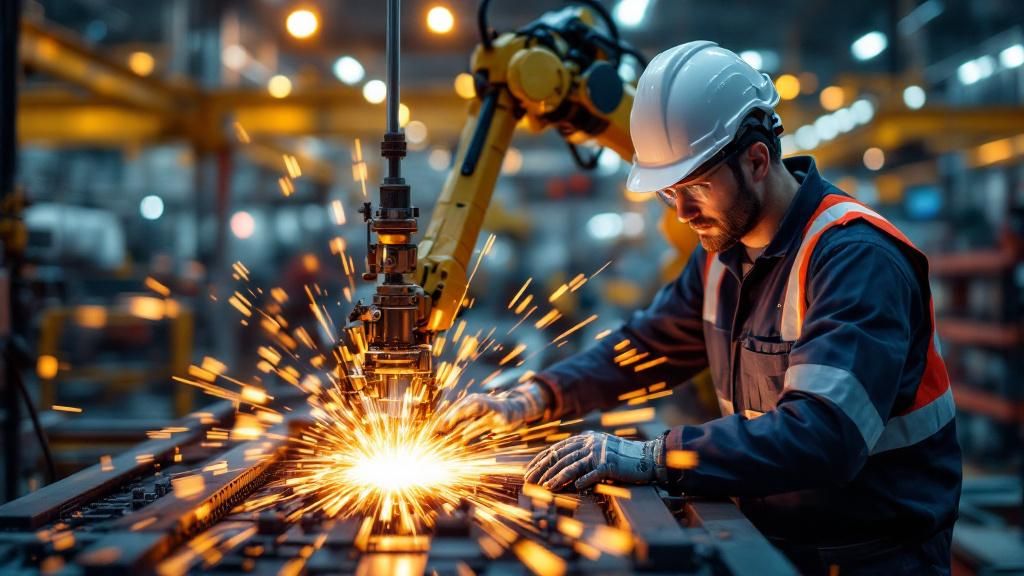
The UK manufacturing landscape is undergoing an unprecedented transformation as business leaders commit record-breaking investments in next-generation automation solutions and extensive skills training initiatives. This deliberate repositioning reflects manufacturers’ commitment to boost operational efficiency, maintain their competitive edge, and ensure sustainable growth. Our investigation reveals the substantial financial commitments driving this industrial revolution, explores the innovative technologies transforming factory floors, and examines how companies are preparing their employees for tomorrow’s demands. Discover what this investment surge means for the UK manufacturing sector’s future.
Rapid Growth in Automated Systems
The UK manufacturing industry has experienced an substantial financial dedication towards automation technology, with capital attaining exceptional amounts in recent years. Major manufacturers across automotive, aerospace, and electronics markets are committing significant funds towards robotic equipment, machine learning, and sophisticated manufacturing approaches. This spending increase reflects industry confidence in automation’s potential to boost operational performance, cut production expenditure, and raise quality benchmarks. The scale of this commitment highlights producers’ understanding that technological advancement is vital for sustaining competitive edge in an ever more globalised marketplace.
Industry analysts link this investment momentum to various overlapping factors, such as post-pandemic logistics review, escalating wage expenses, and the critical requirement for improved operational responsiveness. Companies are focusing on automation technologies that deliver versatility and expandability, allowing rapid adaptation to shifting market needs. Investment data demonstrate that manufacturers are not merely replacing manual operations but fundamentally reimagining manufacturing approaches. This strategic approach ensures that British manufacturing stays at the leading edge of technological progress, establishing the sector for enduring development and enhanced resilience against future economic uncertainties.
Strategic Staff Development Schemes
Acknowledging that technological advancement alone cannot drive success, UK manufacturers are investing substantially in comprehensive workforce development programmes. These initiatives represent a core transformation in how the industry values and nurtures human capital. By coupling automation investments with robust training schemes, manufacturers are ensuring their workforce can competently manage, sustain, and improve new technologies. This comprehensive strategy resolves competency deficiencies whilst enhancing worker confidence and involvement in an progressively technology-driven environment.
Competency Development Initiatives
Leading suppliers have created tailored learning institutions and apprenticeship programmes created to furnish workers with essential digital and technical competencies. These programmes cover robotics operation, analytical data work, cyber security protection, and sophisticated coding languages. Investment in classroom-based and digital learning solutions ensures access to all workforce levels. Companies are working alongside training providers to offer credentials accepted throughout the sector, improving advancement prospects and staff retention levels substantially.
The financial commitment to skills training surpasses onboarding phase, with companies establishing continuous professional development initiatives. Workers receive frequent development options to keep pace with advancing digital landscapes and emerging industry requirements. Many employers offer training subsidies, coaching initiatives, and sabbatical leave for additional study. This ongoing commitment reflects companies’ commitment to developing sustained career pathways and cultivating a ethos of ongoing education across their workforce.
Partnership with Academic Organisations
UK producers are establishing collaborative relationships with universities and higher education institutions to synchronise course design with industry requirements. These collaborations ensure graduates possess hands-on abilities immediately applicable to modern manufacturing environments. Collaborative initiatives include course development, guest lecturing, laboratory access, and resource supply. By working closely with academic organisations, manufacturers shape the flow of talent entering the sector, tackling foreseen capability gaps proactively.
Additionally, manufacturers support research initiatives and technology hubs within academic institutions, fostering knowledge exchange and technological advancement. Combined-degree programmes and industrial placements provide students with crucial practical experience whilst giving companies priority access to new talent. These collaborations strengthen the UK’s standing as a international manufacturing leader, maintaining ongoing competitiveness and presenting Britain as an attractive destination for cutting-edge manufacturing investment and skilled workforce development.
Economic Impact and Prospects Ahead
The record funding for automation and skills training is forecast to generate significant economic benefits across the UK manufacturing landscape. Industry analysts expect efficiency improvements of up to 25% over the next three years, leading to increased output and improved competitiveness in international markets. These advancements are expected to establish approximately 15,000 new skilled manufacturing positions whilst strengthening Britain’s position as a technology-led manufacturing centre. The cascading impact of this funding will potentially encourage development throughout distribution networks and supporting sectors.
Long-term outlooks for UK manufacturing appear increasingly optimistic as businesses establish themselves at the leading edge of Industry 4.0 adoption. Companies investing in automation today are preparing themselves to unlock new market possibilities and adapt rapidly to changing customer needs. The incorporation of artificial intelligence, robotics, and advanced analytics promises to release creative capacity formerly limited by labour availability and operational limitations. Forward-thinking manufacturers recognise that sustained competitiveness depends upon relentless innovation progress and workforce capability development.
Looking ahead, the drive created through existing investment patterns points to a substantial transformation of UK manufacturing’s economic impact. State backing through skills investment and commercial incentives will probably accelerate adoption rates among smaller businesses. As automation develops and worker capabilities increase, British manufacturers are set to regain market share from overseas competitors. This shift constitutes not just industrial modernization but a strategic reorientation of manufacturing as a cornerstone of the UK’s future economic prosperity and technological advancement.
